
You can map fields to control which fields in Outlook get synced to which fields in Salesforce, and vice versa.
Formula fields are not supported, so you will always need to use Text or Boolean fields. This is due to a limitation that Formula fields can not be set when syncing form Outlook to GoMeddo.
Step-by-step guide
Follow these steps to set up a field mapping between Outlook and Salesforce.
Note: you first must configure your Outlook connection before you can set up your default mappings. See Setup Outlook Authentication for more information.
-
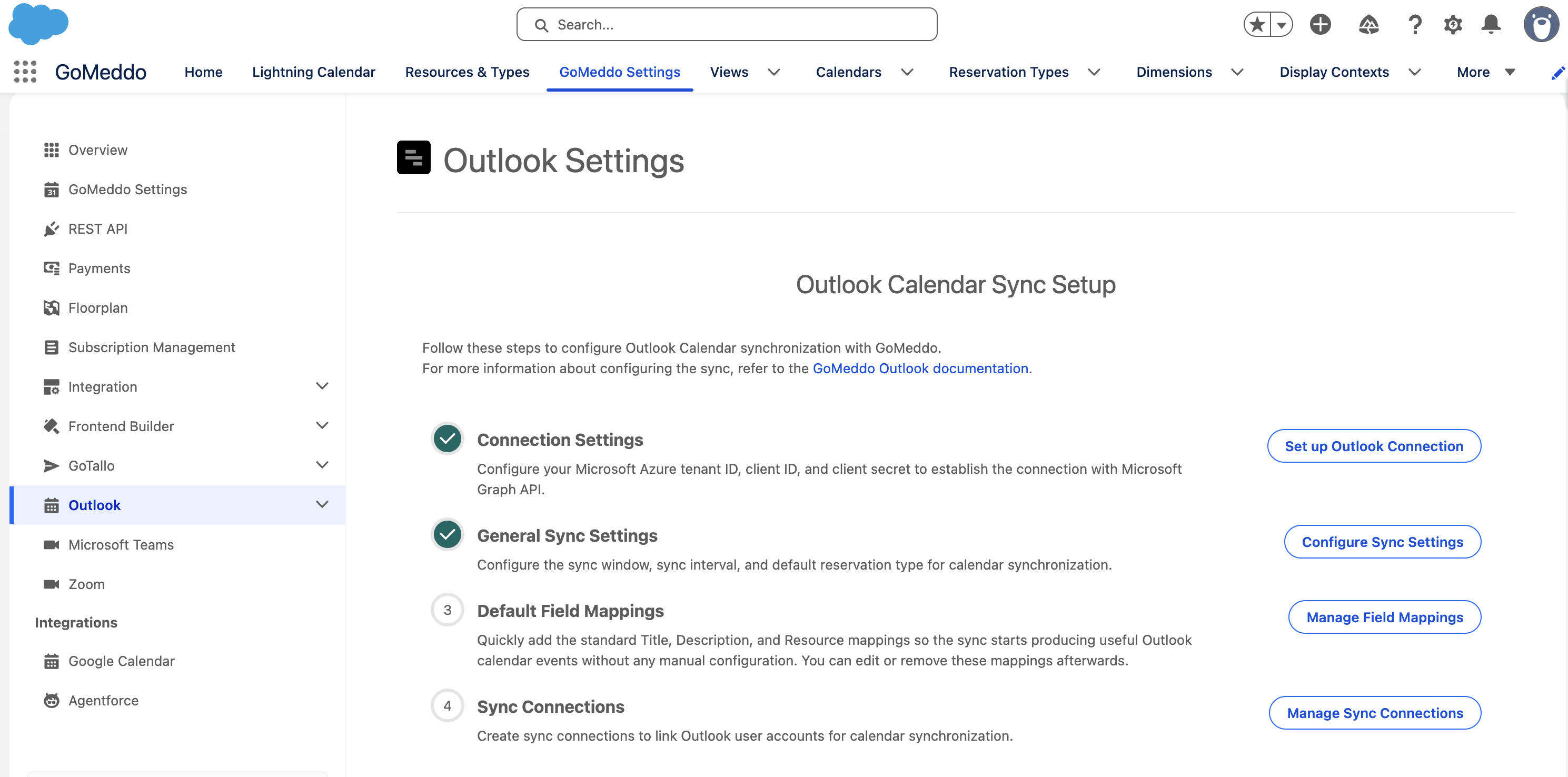
Go to GoMeddo Settings and select the Outlook package. Ensure that you have successfully configured an Outlook connection and that you have saved an initial configuration under General Sync Settings.
-
In the guided setup section, find the step called Default Field Mappings. Click the
Manage Field Mappingsbutton.
-
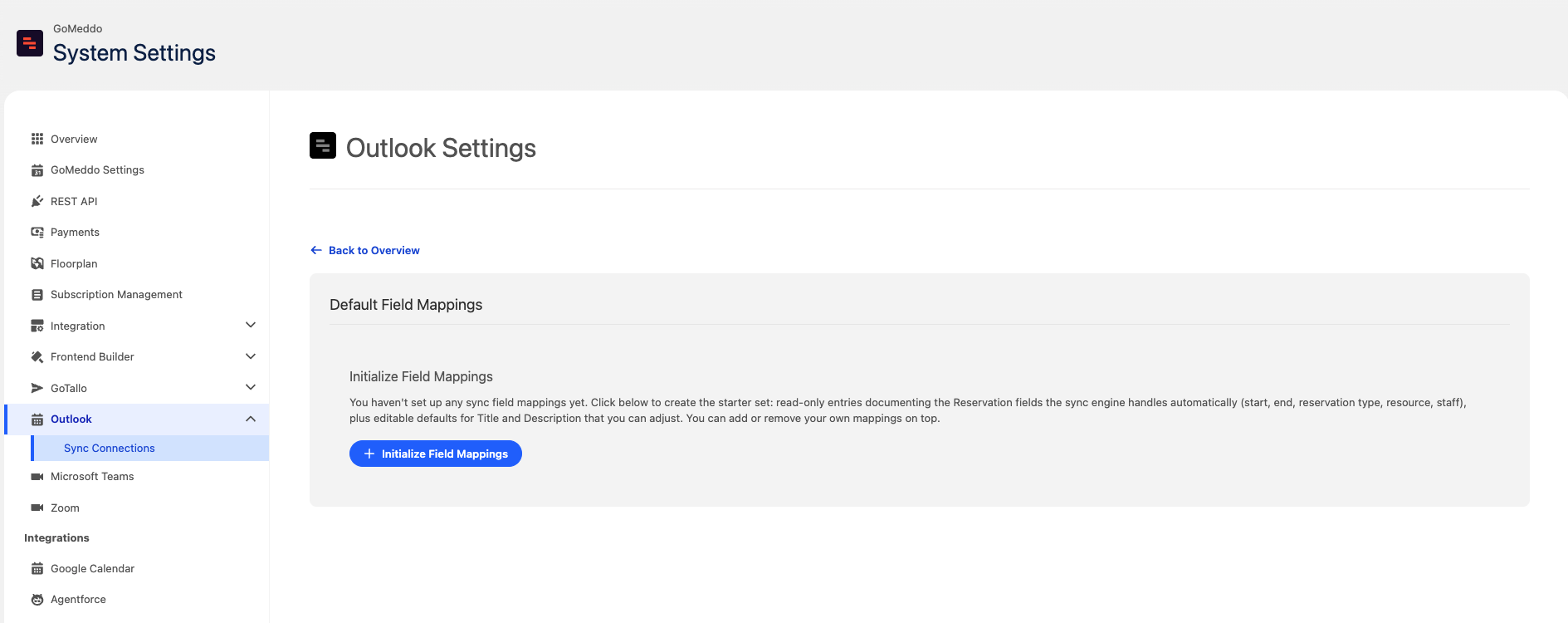
On the following page, click the
Initial Field Mappingsbutton.-
This will trigger a custom metadata creation within your organisation. After this finished successfully, the UI will update with the default field mappings.
-
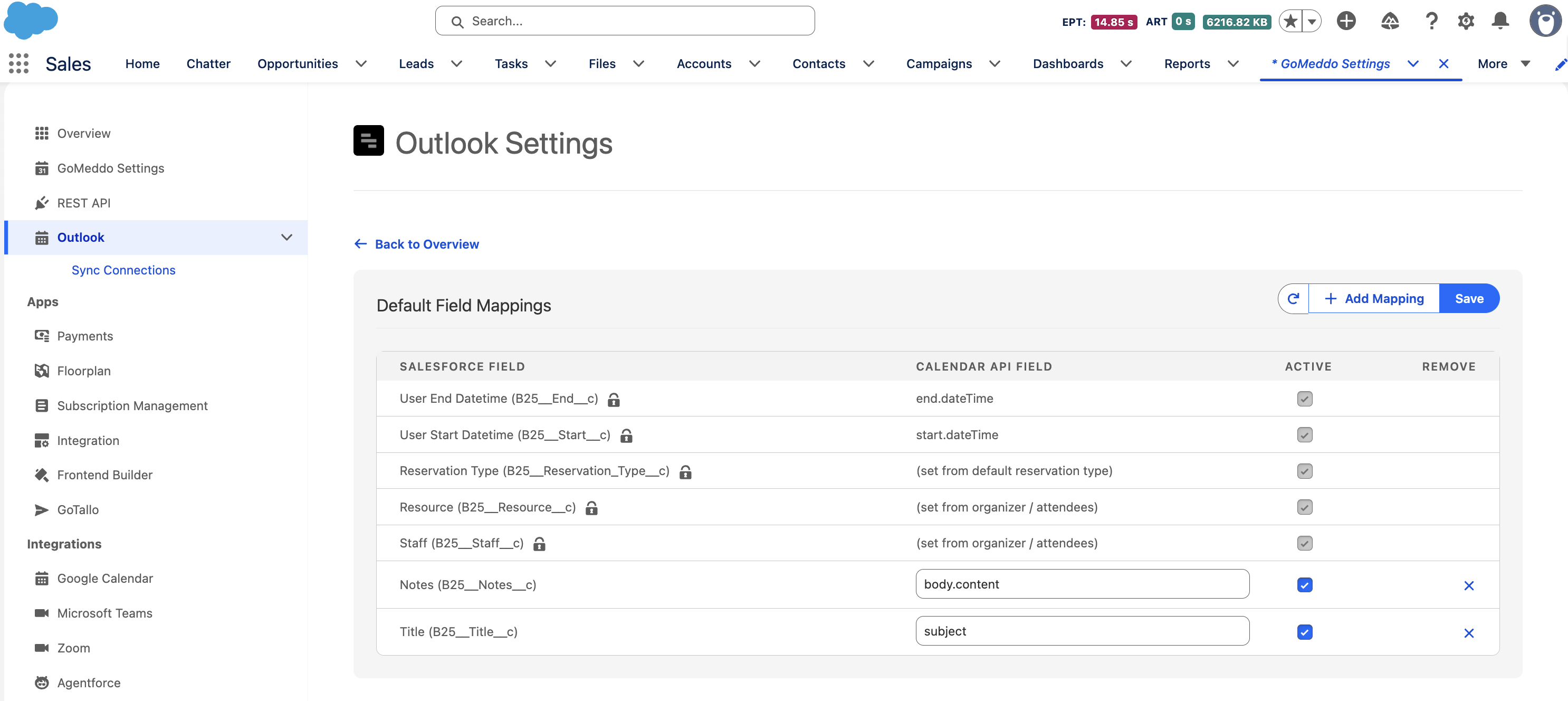
For a list of which Outlook fields can be referenced, see: https://docs.microsoft.com/en-us/graph/api/resources/event?view=graph-rest-1.0 and scroll down to the Properties list.
Note that only writeable fields can be referenced in the field mappings.
You can reference cross object fields from the Outlook response in the API Field with a dot notation, such as recipient.emailAddress
Make sure the data types match of both the Outlook and the Salesforce field.
Private Events
Available from GoMeddo 7.2, you can control how events marked as private in Outlook are synced using the Private event handling setting, found under GoMeddo Settings > Outlook > General Sync Settings.
-
Sync normally: syncs the full event details, as before.
-
Do not sync: skips private events. No reservation is created or updated in GoMeddo.
-
Sync but strip data: keeps the reservation's time slot and resource occupancy, but any mapped text fields on this page show Private instead of the real value.